Sacred Storytelling
All the world’s a stage...and the church is too.

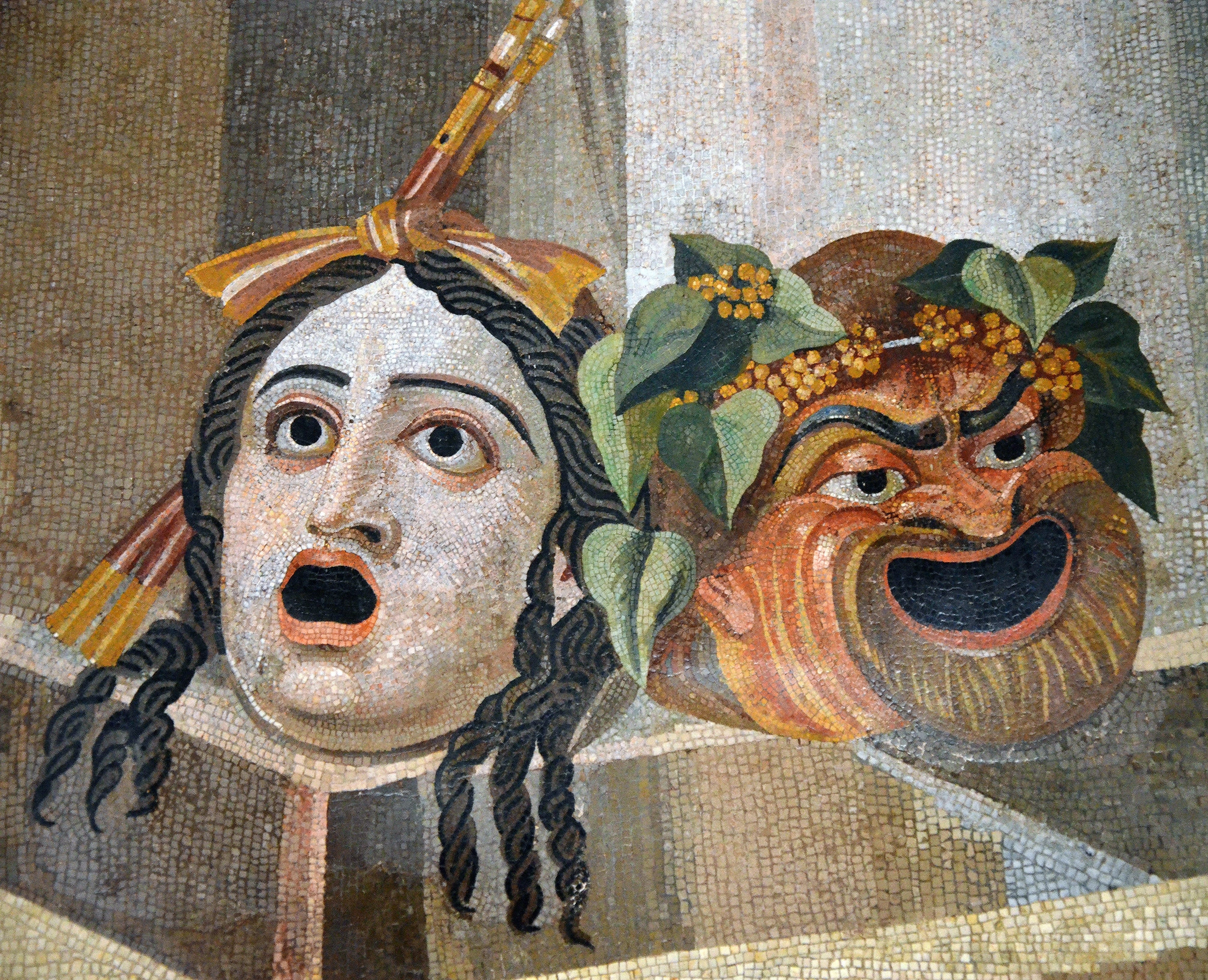
All the world’s a stage.
–William Shakespeare
We humans are story-crafting, storytelling, story-loving creatures. What we do best with the gift of human language is to tell a story. And this storytelling appears to be something of a miracle. I say a miracle, because the origin of the human capacity for complex language is a mystery that continues to baffle philologists, philosophers, and anthropologists, leading some thinkers in the field to claim that the reality of complex human language cannot be explained as a gradual, emergent phenomenon. Increasingly it appears that life, mind, and language did not and cannot arise from a purely materialist cause; rather it is a gift from elsewhere. In All Things Are Full of Gods David Bentley Hart writes,
No anthropologist, no matter how diligent, has ever discovered some intermediary form of communication . . . no philologist, no matter how clever, has ever been able to fabricate a plausible pre-linguistic system of signification, or even a primitive form of language lacking the essential features of fully developed tongues.
In other words, language doesn’t seem to evolve from the ground up, it seems to be bestowed from above. In whatever way it came into being, the capacity for complex human language is unquestionably central to what it means to be human. We humans are the storytellers. While other animals are capable of communicating basic information about danger, food, courtship, and the like, the human animal is composing the Iliad, Hamlet, and Moby Dick.
We spend an enormous amount of our life telling, reading, hearing, and watching stories—from grand fantasy epics like The Lord of the Rings to the mildly interesting anecdote told to co-workers at the office. All we have to do is hear or read the words “Once upon a time” and our interest is piqued with the hope that we can once again be enchanted by some captivating tale. We’re always game for a good story. That’s why at this very moment all over the world hundreds of millions of stories are being disseminated and consumed—a bit of embellished family folklore repeated by grandma for the umpteenth time, a young girl in her bedroom reading A Wrinkle in Time, a commuter on a subway listening to a Harry Potter audiobook, the twelve movies showing at the local cineplex, the masses scrolling through Netflix trying to decide what story will entertain them tonight. This is what we do.
There is a reason why Homer, Shakespeare, J.R.R. Tolkien, and J.K. Rowling are some of the most famous people in history: they rank among our greatest storytellers. Why are Tom Hanks, Morgan Freeman, and Meryl Streep so well-known, so beloved, and so well-compensated? Because they are so gifted and skilled at playing roles in some of our favorite stories. We have an innate love of stories and a remarkable ability to remember stories. If we hear the names Romeo and Juliet or Bonnie and Clyde, an unbidden narrative immediately arises in our imagination. To remember something all we need to do is hear it in the form of a story. From forty-thousand-year-old paleolithic cave art to the Theatre of Dionysus in ancient Athens to the flat screen television in your living room, storytelling has always occupied a central place in the human experience.
All of this indicates that our love for story comes from a deeper place than a fleeting desire for a bit of entertaining diversion. Our love of story is rooted in our search for meaning. Having been summoned out of the dread void of nonbeing we find ourselves hurled into the astounding phenomenon of existence. We have come to be. We are here. We exist. But what does is it all mean? Is there a purpose to it all? To avoid the despair that Søren Kierkegaard called the sickness unto death, we need to believe that our life is more than an absurd and meaningless cosmic accident tumbling out of a random assortment of atoms. We have our physical senses by which we experience the world around us; we have our self-consciousness through which we can contemplate on a deep level our own existence; but what do we make of this? Coherence requires some sort of narrative structure. To prevent life from being just one damn thing after another we need a story. Story is the essence of meaning.
We want our life to have a narrative, and we want our story to be part of something beyond our own atomized existence. We want to belong, to have our part in some bigger story. Absent a metanarrative to interpret our reason for existing and our place within history, the yawning abyss of nihilism awaits. In Fyodor Dostoevsky’s dark novel Demons the nihilistic Alexi Kirillov is constantly asserting that nothing matters, and nothing makes any difference. So we are not surprised when Kirillov kills himself. Most of us would rather cling to any story, even a tragedy, than to fall into the black hole of meaninglessness where suicide takes on its own logic.
In The Lord of the Rings the reason the ever-optimistic Samwise Gamgee doesn’t succumb to despair even in the dark depths of Mordor is because he can muse, “I wonder what sort of tale we’ve fallen into?” Sam can bear up under most any burden as long as he knows he’s part of a story worth telling. Storytellers aren’t mere entertainers, they are evangelists.
This is why post-Enlightenment Christians in the postmodern West need to be reminded of the true nature of the gospel: It’s a story! The gospel is not a set of spiritual laws or abstract theological principles or debated atonement theories. No. The gospel is the story of Jesus Christ. In its most abbreviated form it’s the story of Jesus’ death, burial, and resurrection. A fuller telling of the story takes us from a manger in Bethlehem to an empty tomb in Jerusalem. The biblical Gospels are the gospel. The director’s cut edition is the big story the whole Bible tells—the story that takes us from Genesis to Revelation, from paradise lost to paradise regained, from the alpha of creation to the omega of new creation. To tell the story of Jesus is to preach the gospel.
What we do in church on Sunday morning is not just singing songs, praying prayers, and preaching sermons; rather we are telling a sacred story that others are invited to participate in. There is a sense in which church is a theater for our sacred story—but a theater where everyone is invited to join the performance. Evangelism at its best is akin to the art of storytelling. The possibility of faith arises as we tell the beautiful story of Jesus Christ. We don’t need to cajole or threaten, we just need to tell the story.
The gospel story itself carries with it the capacity to evoke faith. “So faith comes from what is heard, and what is heard comes through the word of Christ.” (Rom 10:17) A good sermon is not a didactic lecture but a well-told story where Jesus is the hero. And because the gospel is the best and greatest of all stories, the church should seek to excel at storytelling—storytelling in sacrament, sermon, liturgy, and even architecture.
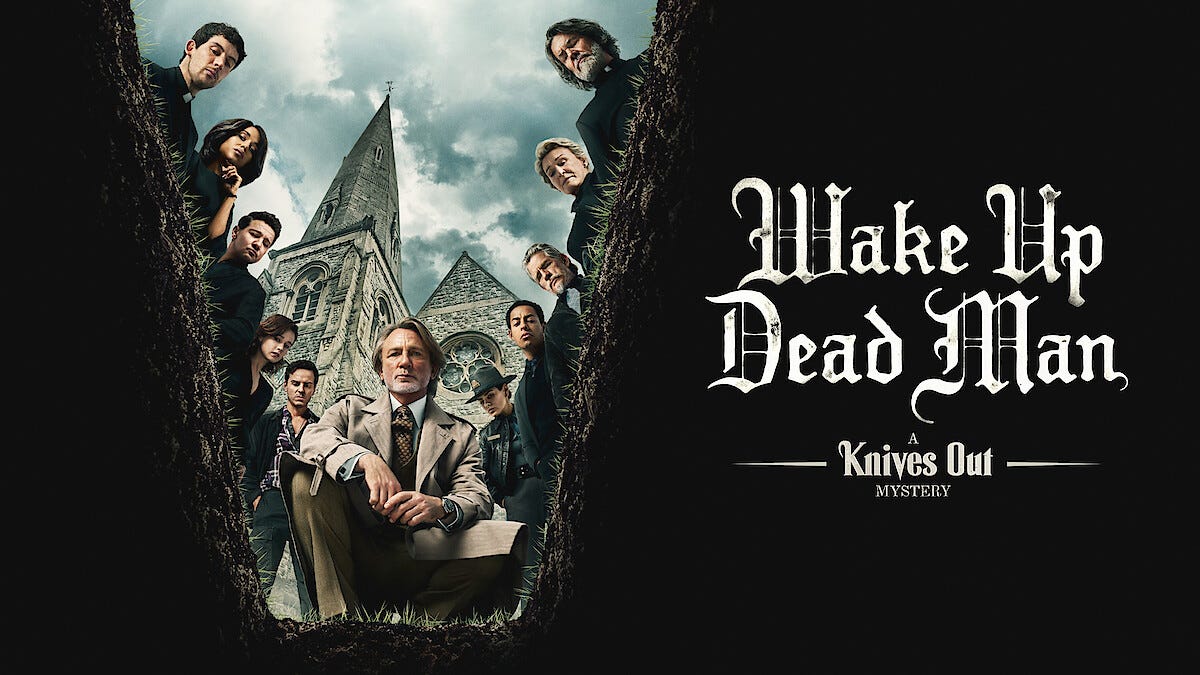
Wake Up Dead Man is the third film in the Knives Out detective mystery series. It’s a brilliant dark comedy that surprisingly carries a profound and beautiful Christian message. At a crucial point in the film, the private detective Benoit Blanc meets the young priest Father Judd Duplenticy for the first time. The meeting takes place in the sanctuary of a neo-Gothic Catholic church in upstate New York. As Benoit Blanc admires the architecture, Father Judd asks what he senses in the sanctuary. The agnostic detective demurs in his southern drawl, “It’s like someone has shown a story at me that I do not believe.” Rather than be defensive about Blanc’s critical observation, Father Judd responds like this:
You’re right. It’s storytelling. And this church is not medieval. We’re in New York. Neo-Gothic nineteenth century. Has more in common with Disneyland than Notre Dame, the rites and rituals and costumes, all of it. It’s storytelling. You’re right. I guess the question is, do these stories convince us of a lie? Or do they resonate with something deep inside of us that’s profoundly true? That we can’t express any other way . . . except storytelling.
Wake Up Dead Man writer and director Rian Johnson places in Father Judd’s mouth the perfect answer to a world skeptical of the Christian gospel. Of course, it’s storytelling. But what does it convince us of? A lie or profound truth? Everyone has to decide that question for themselves. The gospel story can bring us to the precipice of decision, but the leap of faith remains within the realm of our own freedom.
C.S. Lewis as a scholar of literature recognized the mythic qualities in the Christian gospel, but he eventually crossed the chasm of his own skepticism by understanding the gospel as true myth. Alan Jacobs says of Lewis, “He became a Christian not through accepting a particular set of arguments but through learning to read a story the right way. And maybe others could move closer to Christian belief by the same path.”
To preach the gospel is to tell the story of Jesus—not to explain it, but simply to tell it. The magic of The Lord of the Rings or any other great epic is not found in literary analysis, but in the story itself! The same is true of the gospel. Rather than explaining the gospel or making it “practical” or telling hearers how to “apply” it to their life, the primary task of evangelism is to simply tell the evangel as the compelling story that it really is. We don’t need to fully understand the gospel to be drawn into its beautiful mystery. The gospel is not an axiom, it’s an epic—the adventure of God joining humanity in Christ.
After a lifetime of hearing, reading, and studying the gospel I can’t explain all of it, but I love the story and I believe it. And most important of all, the gospel story has been and is being woven deeply into my own story, which is another way of saying I am being saved.
BZ
Raw doctrine, in itself, fails to grip us. When I was in Bible school every one of us could not wait to sink our teeth into the book of Romans, all the while missing the pure beauty of the gospel in the four gospels. Without the gospels Romans can be like eating shredded wheat cereal without milk
Jesus Christ, the central character in the greatest story ever told was himself a storyteller. Much of what He taught us was framed by his own parable stories.