Getting Off the Wrong Bus
Regarding Our Spiritual Pilgrimage

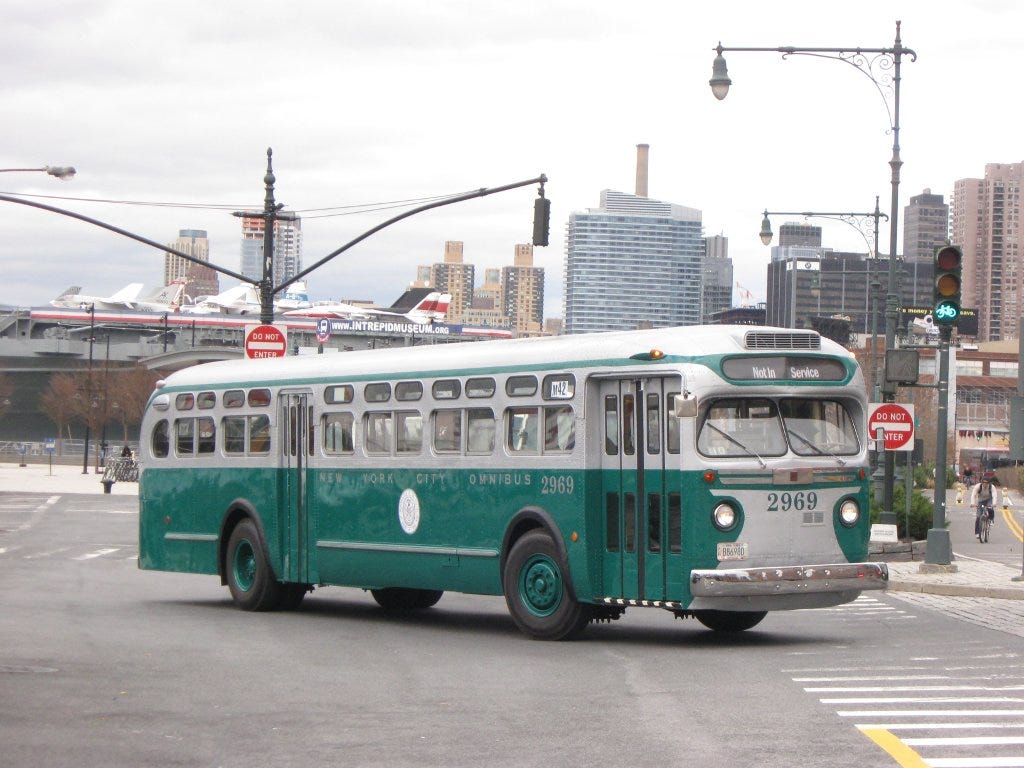
GETTING OFF THE WRONG BUS
To stay on the road in our spiritual pilgrimage is a poetic way of talking about continuing to think, learn, and grow. We all know that some formal educational process is necessary lest we enter adulthood as an illiterate dolt unprepared for life. But the problem with formal education is that for many people, the graduation ceremony in their late teens or early twenties marks the end of their education. The door of serious learning is now shut. They regard their education as an adolescent or young-adult task that is now complete—and they have a diploma to prove it.
But to end our education in the first quarter of life is an absurd folly. At twenty-two our education has barely begun. And I fear that the problem of a premature end of learning is even more common in our spiritual-theological education.*
*In speaking of spiritual-theological education or development, I realize that spirituality (the formation of the soul) and theology (how we think and speak about God) are not exactly the same thing, but they are closely related. How we think about God (theology) and how we pray (spirituality) are bound together in a symbiotic relationship; our spirituality and theology are never entirely independent of one another.
Often our arrival at a spiritual-theological fixed state has to do with our identity within a specific denomination, tradition, or theological tribe. When our primary commitment is to a particular religious community, any further theological development that might move us beyond the communal boundaries of the denomination or tradition is frowned on. We are led to believe that there is safety in staying true to our particular theological tribe no matter what.
Movement beyond the set boundaries is seen as a form of apostasy. In this case, the more restrictive boundaries of the theological tribe replace the wide and spacious boundaries of historic orthodoxy as generously defined by the ecumenical creeds. I’m thinking of non-denominational churches who incorporate modern dispensationalism in their “What We Believe” page on the church website. It’s not exactly the Nicene Creed, if you know what I mean.
Ironically a fear-induced refusal to stay on the journey is not the guarantee of spiritual and theological safety that it claims to be. Religious groups can themselves drift and move over time—and then you’re just along for the ride. Here I’m thinking of something that grieves me deeply. I find it utterly incomprehensible and profoundly sad that so many of my Jesus freak friends from the 1970s with their “One Way” T-shirts have morphed into MAGA Christians with their silly red hats.
What happened? I simply cannot believe that very many of these good people gave it personal, prayerful consideration and then thoughtfully concluded it would be a good idea to give the likes of Donald Trump quasi-religious devotion. No, I don’t think this is what happened at all. What happened is this: at some point these people were conducted aboard a particular ideological bus by a handful of celebrity preachers and televangelists, and then they let the bus take them where it would. Søren Kierkegaard diagnoses the problem in this hard-hitting sentence: “Even though every individual possesses the truth, when he gets together in a crowd, untruth will be present at once, for the crowd is untruth.”
Such is the persuasive power of the crowd. Sitting resolutely where you have always sat offers no spiritual security at all if you’re riding an ideological bus moving toward untruth. At some point we have to take responsibility for our own spiritual journey.
This is what happened to me in midlife—I woke up one day and realized the bus I was on was taking me somewhere I didn’t want to go. The movement I had been swept up into in the 1970s that had been characterized by a radical devotion to Jesus had strangely morphed into the de facto religious wing of a political party. That’s when I got off the bus and made a decision to walk my own road.
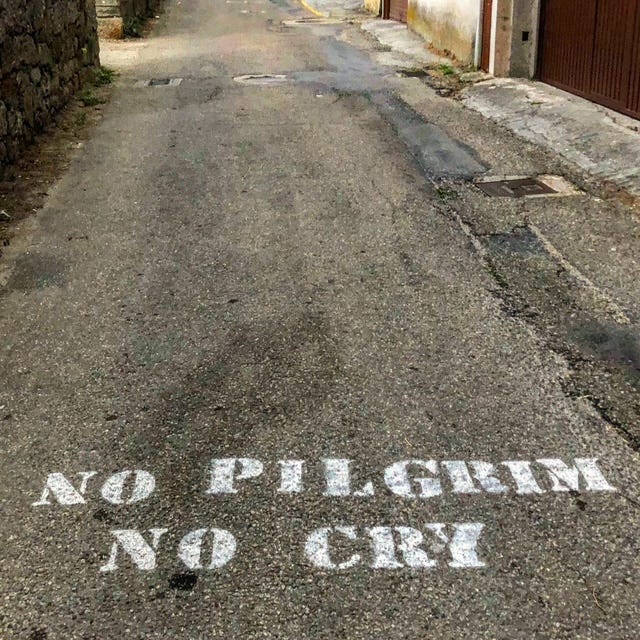
It’s not just the lone pilgrim who can go astray—entire movements can veer radically off course. The Southern Baptist Convention of my father’s day is not the Southern Baptist Convention of our day. Just ask Beth Moore and Russell Moore. Institutions can make wrong turns and venture onto wrong roads, taking multitudes of passive passengers along for the ride. And that’s the point: to stay on the road is to make an authentic decision—not to just drift along with the crowd. If you’re on the wrong bus, loyalty to the bus line isn’t going to do you any good.
Let’s hear again from the Great Dane. It was this passage from Søren Kierkegaard that twenty years ago directly influenced my decision to leave the politicized Christianity in the style of Pat Robertson’s Christian Coalition and no longer be a passenger on that partisan bus.
Can there be something in life that has power over us which little by little causes us to forget all that is good? And can this ever happen to anyone who has heard the call of eternity quite clearly and strongly? If this can ever be, then one must look for a cure against it. Praise be to God that such a cure exists—to quietly make a decision. A decision joins us to the eternal. It brings what is eternal into time. A decision raises us with a shock from the slumber of monotony. A decision breaks the magic spell of custom. A decision breaks the long row of weary thoughts. A decision pronounces its blessing upon even the weakest beginning, as long as it is a real beginning. Decision is the awakening to the eternal.
Twenty years ago I made a critical decision to be radically intentional about following Jesus—even if it took me on a different path than the crowd I had traveled with for so long. It was part of my second half of life conversion—a conversion where I was born again again. It saved my soul as surely as my teenage conversion did. It was the shock I needed to raise me from the slumber of monotony. I made a decision to disembark the charismatic bus and set out on foot—if need be, all alone. Fortunately I was not alone. As pilgrims always do, I found other pilgrims on the road . . .
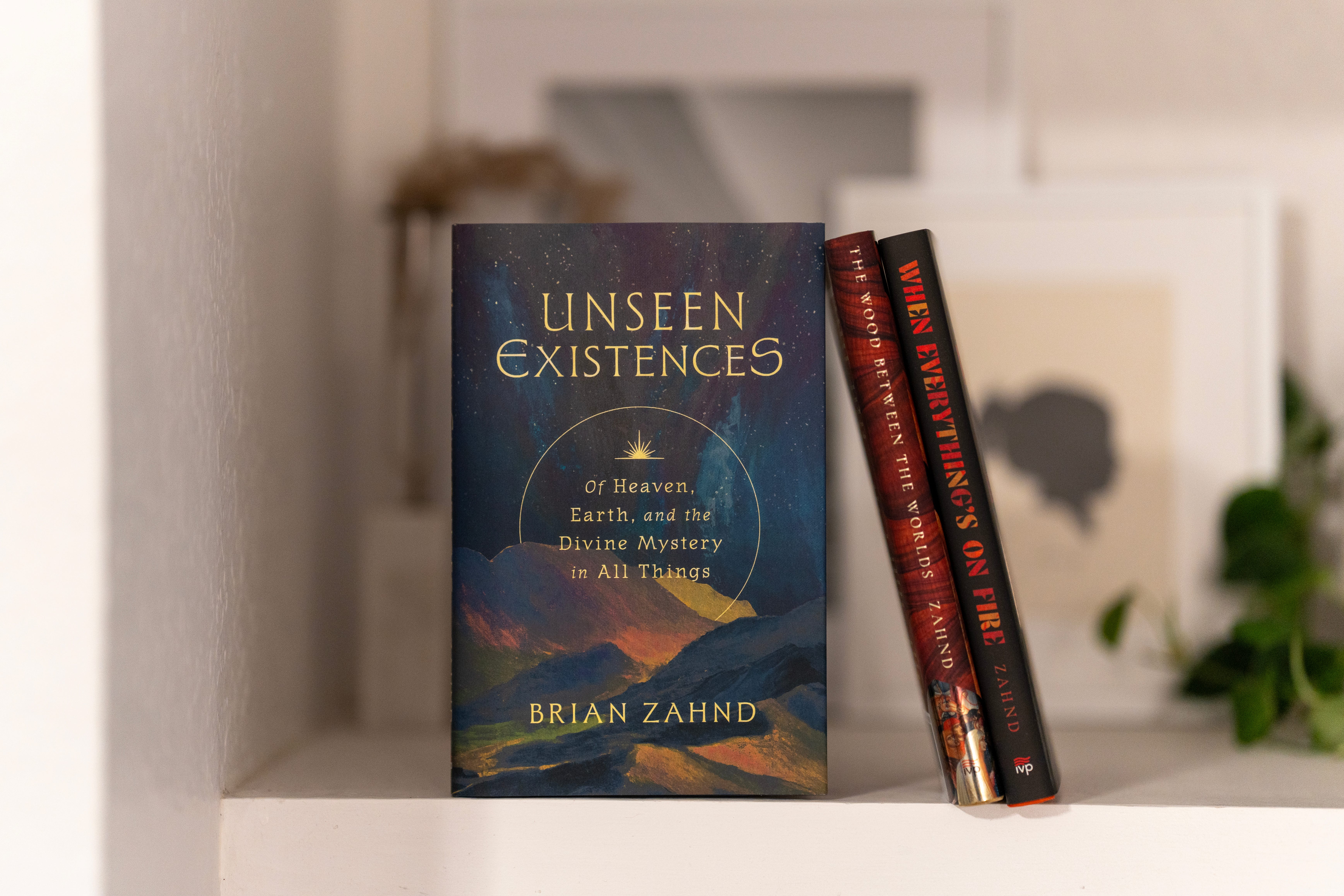
—Excerpt from Unseen Existences, chapter 3, “On the Road”
The bus does not announce the turn. That is the part nobody warns you about. One Sunday the scenery still looks familiar.
A few years later you glance out the window and nothing matches what you signed up for. But the seats are comfortable and everyone around you seems fine, so you assume you are on the right bus.
Until its final stop...
Thank you for this, you capture brilliantly some of my own recent thoughts around transformation and spiritual path. How easy in our initial excited certainty it is to believe we have arrived, suitcase of answers and all, only to find years later that the bus was still moving. I look forward to reading the book.