Change the World?
Our task is far more modest

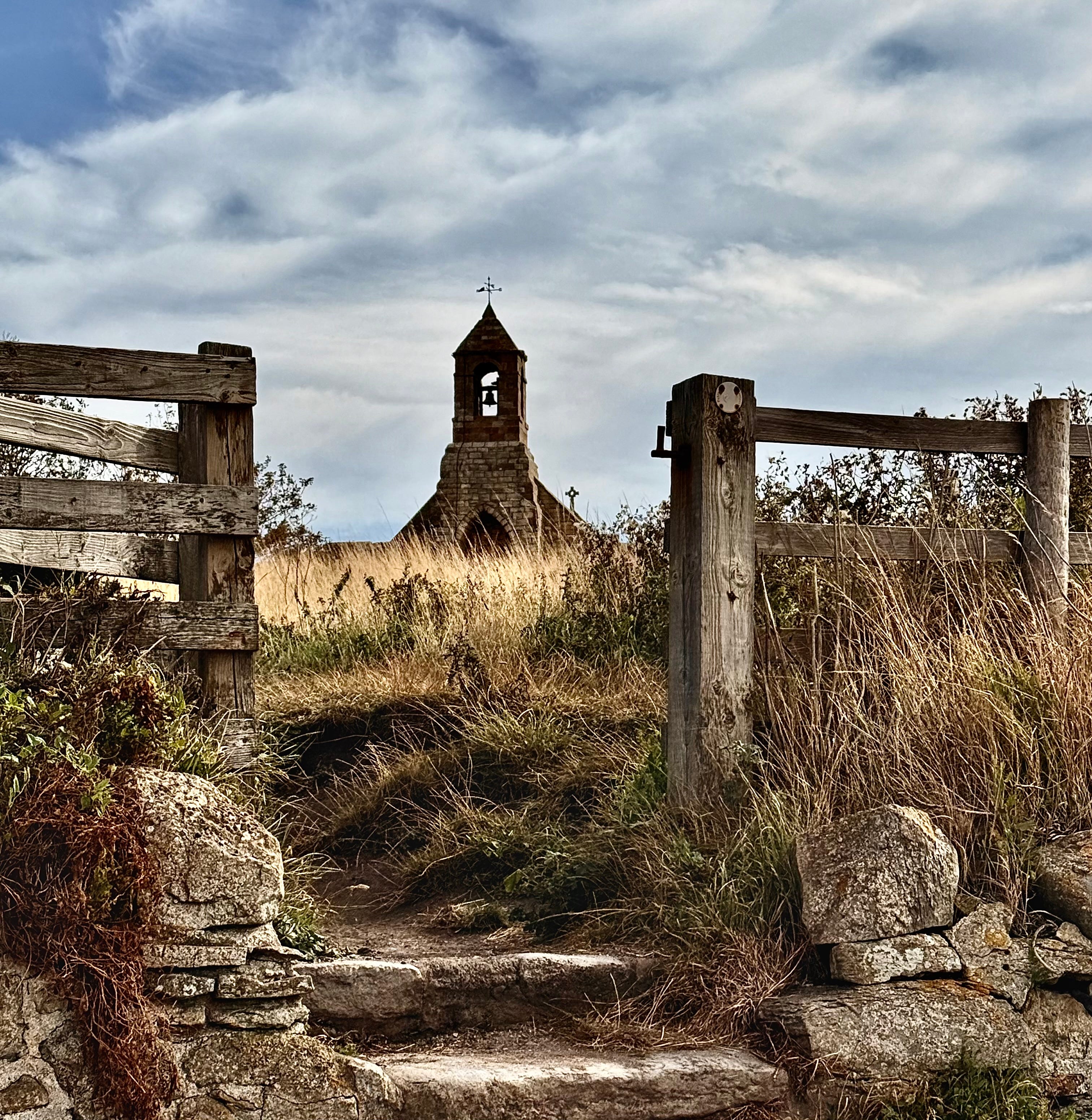
St Mary’s Church on the Holy Island of Lindisfarne, UK
Change the world! In the church we love that kind of brash rhetoric. What are we gonna to do? We’re gonna change the world! It’s a sermon title, a song lyric, a conference theme, a youth rally battle cry, a motto for a movement. We’re important people! We’re world-changers! We’re history-makers! I understand the appeal. But I also insist that as far as the church is concerned, the assumption that it is our task to “change the world” is mistaken and wrongheaded.
It’s not our job to change the world. Jesus is the Savior of the world, not us. (The buoyant hope that sustains me in dark days is my conviction that the world really will be saved because Jesus really is the Savior of the world. Apokatastasis, baby!) Changing (or saving) the world is a task belonging to the Son of God. Our task is far more modest: To simply be that part of the world already changed by Christ. As Yves Congar said, “The church is the world as believing in Christ.”
Clarifying our task is important. When we think it is the task of the church to directly change the world, we find the lure of political power impossible to resist. When we assume we are the ones to change the world, we reach for what we imagine to be the most immediate means of effecting change—political power. We’re the good guys, so we should control the sword of Caesar, right? We’re the ethical ones, so we should control legislation, right? We’re the trustworthy ones, so we should be entrusted with coercive political power, right? Wrong! When the church (as an institution) sets out to change the world by political power, it does not change the world, it becomes the world.
Stanley Hauerwas has said it a million times: “The first task of the church is to make the world the world.” To be a faithful church we must be something other than the world. We must be fundamentally different from the world. But there is nothing more worldly than coveting political power. A church prioritizing political power becomes just another religious iteration of the world as it is. Nothing really changes. Meet the new boss, same as the old boss.
The church is given the keys to confer or withhold forgiveness, not the coercive sword of political power. When Constantine offered political power to the church by making it the state-sponsored church of the empire, the church willingly embraced the offer. It seemed too good to be true. (It was.) Church collusion with the apparatus of the state was probably an inevitable mistake in the fourth century, but it has been our bane ever since. There are always strings attached to Caesar’s gifts. For a seat at the table of political privilege and a hand upon the sword of political power, the emperor expects a kind of allegiance that can only lead to compromise.
Christ is ever and always a challenge to the aspirations of empire, but when we get too cozy with Caesar our willingness to take a prophetic stand quickly evaporates. This is true for both elephants and donkeys. Christians who play for the elephant team and Christians who play for the donkey team both agree that political power is essential, they just disagree on what to do with it. But I’m suspicious of the whole project.
Whether offered by Constantine or Charlemagne or Donald Trump, we keep thinking that political power is a gift instead of realizing that it is a poison that will eventually corrupt us. We are like the valiant but tragic Boromir in The Lord of the Rings who thought the One Ring was a gift that could be used for good. In Boromir’s fateful words I hear the church’s recurring justification for the pursuit of political power.
True-hearted Men, they will not be corrupted. And behold! in our hour of need chance brings to light the Ring of Power. It is a gift, I say.
But Boromir’s pragmatic justification for taking possession of the Ring of Power led to his betrayal of the Fellowship. We don’t need Caesar’s sword as the Ring of Power. By the outpouring of the Holy Spirit the church is given the power of co-suffering love, not co-regency with Caesar. The church is not to covet a share in the coercive power of the imperial sword. If Caesar offers it, we must refuse it. We don’t need an invitation to Palatine Hill or the White House. Breakfast with Caesar is always a bad idea—that kind of proximity to worldly power is too great a temptation. We cannot flirt with political power and not be corrupted by it.
My critique of both the Christian Right and the Christian Left is the same. (Caveat: I acknowledge that in the present moment there is no moral equivalency between the two, at least in my view. Nevertheless my critique remains.) My critique is this:
With both the Christian Right and Left, Christian is reduced to adjective duty in service to the all-important political noun. What really matters is Right or Left politics, while Christian is tacked on as a nice religious accoutrement. When some faction of the church becomes the de facto religious wing of a political party, Jesus is reduced to a mascot who is trotted out on stage to meekly utter his endorsement. I am Jesus Christ and I approve this message. God forbid!
The kingdom of Christ is its own politics, and as such it will never neatly align with any of the political parties of this world. The prime imperative of a political party is to win. But “winning” is not an imperative in the kingdom of God. Partisan political winning too often gets in the way of Christlike love. By their very nature the politics of this world are incapable of embodying the kingdom of heaven. When it comes to the politics of this age Christians need the saving grace of modest expectations.
“For here we have no enduring polis, but we are looking for the polis to come.” –Hebrews 13:14
The church is to be a present and visible anticipation of the polis to come. And I believe it can be. Do you think I’m a romantic idealist? Perhaps I am, but I do see real-life glimmers of kingdom-come day-after-day in the church I’ve been a part of for forty-five years. In actual lived reality the poor are provided for, the rich are taught how to share their wealth responsibly, the immigrants are welcomed and protected, the overlooked are given recognition, the ostracized are given dignity, the losers are lifted up, the winners are taught humility, the addicted are invited into a community of recovery, the grieving are wept with, and sinners of every stripe are given the good news of God’s grace. This is not naïve abstraction or wishful fantasy, this is on-the-ground justice, this is grace made visible. It’s not a perfect church, but it is a church where mercy and justice have kissed, and where kindness is a culture. If you doubt it, come and see.
What I’m describing is the yeast of the kingdom of God hidden in three measures of flour. It’s not the glory of triumphant political power, it’s yeast. It doesn’t effect change by coercive force but through the quiet miracle of fermentation. It’s not loud or ostentatious; it’s not fearmongering, and it doesn’t hand out voter guides. But the bread still rises, the water still turns to wine. It’s very local, very proximate, very personal, and mostly quiet. It won’t make headlines—it’s too pedestrian for that. And if you say, “That’s how we change the world!” I say, “Shh! Don’t say it out loud! It’s a secret! It’s yeast hidden in the dough. It’s our hidden treasure.”
We’re not trying to change the world. We’re content to be one tiny corner of the world being slowly, quietly, patiently transformed by Jesus. Blessed be the name of the Lord.
BZ
P.S. This is a hastily dashed-off foray into political theology—the most fraught of all theological territories. And whenever I dare to venture into that tricky territory, I hear my own, Yeah, but… What this piece needs is ten-thousand words of nuance, but I’m not going to do that here. To tell the truth, when I engage in political theology, I agree with about eighty percent of what I say. So if you found something in this piece you disagree with, there’s a twenty percent chance that I disagree with it too. Keep that in mind before you get too mean in the comments. Mercy triumphs over judgement.
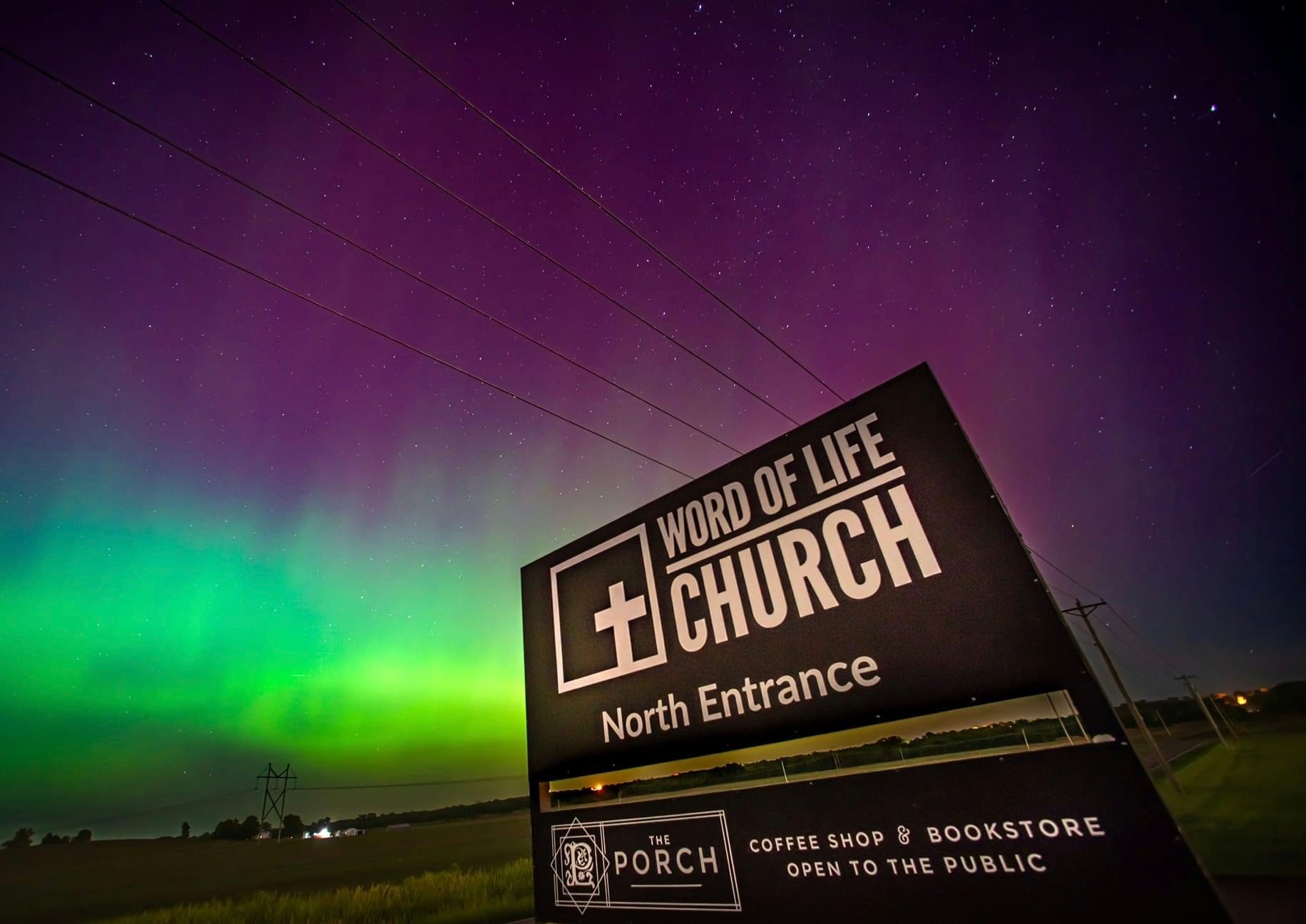
Word of Life Church in the holy cornfield of Missouri, USA
I’ve read all your books…still going through the last one, and this may be the best thing you’ve ever written. May we hear this news! We don’t have to change the world….we just really, really need to be the church. Thank you for sharing. 😊
Thank you Brian! In these days we, the Church, need to be reminded of this!